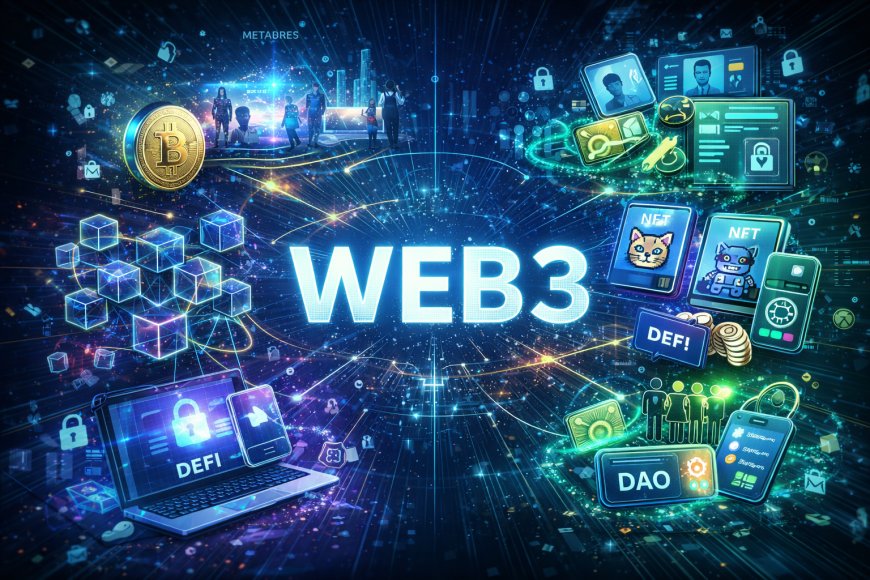

Is Web3 the Internet’s Next Revolution?
The internet has evolved dramatically over the past three decades. From static web pages (Web1) to interactive platforms and social media (Web2), we are now entering a new era—Web3.
But what exactly is Web3? Is it just hype driven by cryptocurrencies, or is it a genuine technological revolution that will redefine how we interact online?
In 2026, Web3 is no longer a fringe concept. It’s shaping industries like finance, gaming, digital identity, and content creation. This article explores everything you need to know about Web3—how it works, why it matters, its real-world use cases, challenges, and what the future holds.
What Is Web3? A Simple Explanation
Web3 refers to a decentralized version of the internet built on blockchain technology. Unlike traditional platforms controlled by large corporations, Web3 aims to give users ownership, control, and privacy.
Core Principles of Web3
- Decentralization: No single authority controls the network
- Transparency: Transactions are publicly verifiable
- User Ownership: You own your data and digital assets
- Permissionless Access: Anyone can participate without approval
In simple terms, Web3 shifts power from platforms to users.
Web1 vs Web2 vs Web3: Understanding the Evolution
| Era | Description | Key Feature |
|---|---|---|
| Web1 | Read-only web | Static content |
| Web2 | Read-write web | Social media & platforms |
| Web3 | Read-write-own web | Decentralization & ownership |
Web2 made companies powerful. Web3 aims to make users powerful.
Key Technologies Behind Web3
1. Blockchain Technology
Blockchain is the backbone of Web3. It’s a distributed ledger that records transactions securely and transparently.
2. Smart Contracts
Self-executing programs that run on blockchains. They automate agreements without intermediaries.
3. Cryptocurrencies
Digital currencies used for transactions, incentives, and governance within Web3 ecosystems.
4. NFTs (Non-Fungible Tokens)
Unique digital assets that represent ownership of items like art, music, and virtual goods.
5. Decentralized Applications (dApps)
Apps that run on blockchain networks instead of centralized servers.
Why Web3 Is Trending in 2026
1. Growing Concerns About Privacy
Users are increasingly aware of how companies collect and monetize their data.
2. Demand for Digital Ownership
Creators want to own their content instead of relying on platforms that take large cuts.
3. Rise of Decentralized Finance (DeFi)
Financial services without banks are attracting millions of users globally.
4. The Creator Economy Boom
Web3 enables direct monetization without intermediaries.
5. AI + Web3 Integration
Combining AI with blockchain is opening new possibilities for automation and trust.
Real-World Use Cases of Web3
1. Decentralized Finance (DeFi)
Users can lend, borrow, and trade assets without banks.
2. Gaming (Play-to-Earn)
Players earn real-world value through in-game assets.
3. Digital Identity
Users control their identity without relying on centralized providers.
4. Content Creation
Artists and writers monetize directly via NFTs and tokens.
5. Supply Chain Transparency
Track products from origin to consumer using blockchain.
Web3 vs Traditional Internet: What’s the Difference?
Web2 Problems
- Data owned by corporations
- Centralized control
- Privacy concerns
- Platform dependency
Web3 Solutions
- User-owned data
- Decentralized governance
- Enhanced privacy
- Open ecosystems
The Role of Cryptocurrencies in Web3
Cryptocurrencies are not just digital money—they are the fuel of Web3 ecosystems.
They enable:
- Transactions
- Governance (voting in DAOs)
- Incentives for participation
Without crypto, Web3 cannot function.
Challenges Facing Web3 Adoption
1. Scalability Issues
Blockchain networks can be slow and expensive.
2. User Experience
Wallets and private keys can be confusing for beginners.
3. Regulation Uncertainty
Governments are still figuring out how to regulate Web3.
4. Security Risks
Smart contract bugs and scams remain a concern.
5. Market Volatility
Crypto price fluctuations affect adoption.
Common Myths About Web3
“Web3 is just crypto hype”
While hype exists, the underlying technology has real potential.
“It’s too complicated”
User interfaces are improving rapidly.
“It replaces the entire internet”
Web3 will likely coexist with Web2 rather than fully replace it.
How to Get Started with Web3
1. Create a Crypto Wallet
Use wallets like MetaMask or hardware wallets.
2. Learn About Blockchain
Understand how transactions work.
3. Explore dApps
Try DeFi platforms, NFT marketplaces, and Web3 games.
4. Stay Safe
Never share private keys or seed phrases.
Is Web3 the Future or Just a Trend?
Web3 represents a bold vision for a decentralized, user-owned internet. While challenges remain, its potential to reshape digital interactions is undeniable.
The question is not whether Web3 will exist—but how big its role will be in the future of the internet.
For users, creators, and businesses, now is the time to understand and explore this evolving ecosystem.