
Introduction: Your Identity, Your Rules
In today’s digital world, we’re constantly logging into platforms, sharing our data, and trusting third parties with our personal information. From email accounts to banking apps, our identity is spread across countless databases—many of which are vulnerable to breaches, leaks, and misuse.
Decentralized Identity (DID) flips this paradigm. Instead of handing over your data, you control it. You decide when, how, and with whom to share your credentials. Built on blockchain principles, DID is one of the most promising use cases in the Web3 ecosystem—ushering in a new era of digital autonomy.
This article explores how decentralized identity works, why it matters, and how it could reshape privacy, access, and authentication on the internet.
1. What Is Decentralized Identity?
Decentralized identity (DID) refers to a framework in which individuals manage and control their digital identity without relying on a central authority or intermediary (like Facebook or Google). It’s a user-centric model where identity data is stored in a decentralized manner, typically secured by blockchain technology.
A DID is:
- Unique: Each identity is globally unique.
- Cryptographically Secure: Verified via digital signatures.
- Portable: Can be used across platforms and borders.
- Self-Owned: You own and control it.
In short: your data, your rules.
2. The Problem with Centralized Identity Models
Traditional identity systems rely heavily on centralized databases. Consider how many platforms require you to:
- Create a username and password.
- Provide email and phone verification.
- Submit personal documents for KYC (Know Your Customer).
These systems face major challenges:
- Security Breaches: A single hack can expose millions of identities.
- Data Silos: Your data is fragmented across platforms.
- Lack of Control: Companies own your information, not you.
- Privacy Risks: Data is often sold or shared without consent.
A decentralized identity infrastructure aims to resolve all these issues by replacing trust in corporations with trust in cryptographic protocols.
3. How Does Decentralized Identity Work?
The decentralized identity model involves a few key components:
a) DID (Decentralized Identifier)
A globally unique string (e.g., did:example:123456789) that links you to your digital identity. Think of it as your blockchain ID.
b) Verifiable Credentials (VCs)
These are digital statements issued by trusted entities (e.g., government, university) that can be presented and verified cryptographically.
Example: Your university issues you a digital diploma credential. You can show this credential to a job portal without the university being involved again.
c) Identity Wallets
Secure applications where users store and manage their DIDs and VCs. These act as your digital passport.
Popular examples include: MetaMask, Dock Wallet, Trinsic, and Bloom.
d) Blockchain Anchoring
The integrity of identities and credentials is anchored to a blockchain ledger to ensure immutability and auditability.
4. Use Cases of Decentralized Identity
The potential applications of DID technology are vast:
- Single Sign-On (SSO): Authenticate across websites without creating new accounts.
- KYC/AML Compliance: Financial institutions can verify users without storing sensitive data.
- Education: Share verified degrees or certifications without intermediaries.
- Healthcare: Own and share your medical history with hospitals securely.
- Voting Systems: Enable secure, verifiable online voting.
- Job Marketplaces: Share employment history and credentials with full privacy.
In each case, the power shifts from corporations to individuals.
5. Benefits of Decentralized Identity
Some key advantages include:
- Enhanced Privacy: Share only what’s necessary—nothing more.
- Data Sovereignty: Individuals own and manage their identity data.
- Interoperability: Use the same identity across various platforms.
- Improved Security: Reduces risk of data breaches.
- Cost Efficiency: Organizations save on storage and KYC overheads.
It’s a win-win for both users and service providers.
6. Challenges to Adoption
Despite its potential, DID faces several hurdles:
- Lack of Regulation: Governments are still unclear on how to treat decentralized IDs.
- User Experience (UX): Managing keys and credentials can be intimidating.
- Interoperability Issues: Multiple DID standards may not work well together.
- Institutional Resistance: Centralized platforms may resist giving up control.
These challenges are slowing adoption but also opening doors for innovation in DID-focused UX and standards.
7. Real-World Projects Working on DID
Several major initiatives are paving the way:
- Microsoft’s ION: A decentralized identity network built on Bitcoin.
- Sovrin Network: An open-source DID network for self-sovereign identity.
- uPort: A project from ConsenSys that helps users create digital identities on Ethereum.
- Dock: Enables issuing and verifying credentials via blockchain.
Each project is contributing to a larger vision of an identity system that puts people first.
8. The Role of DID in Web3
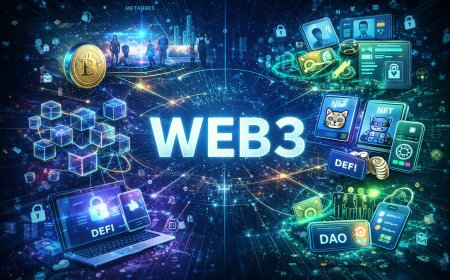
In the broader Web3 vision, decentralized identity is a foundation layer. Whether you’re accessing a DeFi protocol, buying an NFT, or voting in a DAO, identity and verification matter.
With DID:
- You sign into dApps seamlessly.
- You carry your reputation across platforms.
- You prove ownership or qualifications on-chain.
It eliminates the need for repetitive verifications and passwords across services, helping make Web3 more usable and secure.
9. What the Future Holds
In the coming years, we may see:
- Governments issuing decentralized IDs (e.g., Estonia, South Korea pilot programs).
- Decentralized passports and driver’s licenses.
- Biometric integration for secure key management.
- Integration with IoT devices for identity verification.
With growing demand for digital privacy and transparency, decentralized identity is poised to become the new norm, not the exception.
Conclusion: The Revolution of “Me”
Decentralized identity represents more than just a technical shift—it’s a philosophical one. It redefines digital freedom, placing individuals in charge of their identity in a way that respects privacy, autonomy, and security.
As Web3 continues to mature, DID will likely become a critical layer for enabling a safer, more equitable, and self-sovereign internet. It’s not just about logging in—it's about taking back control of who you are in the digital world.