Introduction: The Rise of Machine-Made Imagination
Once thought to be the exclusive domain of human talent, creativity is now being challenged—and reimagined—by artificial intelligence. With the rapid advancement of generative AI tools, machines are no longer just calculating—they’re composing symphonies, crafting novels, and generating artworks that rival human expression. From painting vivid dreamscapes to writing emotionally resonant poetry, AI-powered creativity is emerging as one of the most fascinating and controversial frontiers in modern technology.
But what does it mean for art when the artist is an algorithm? How is music affected when melody springs from machine learning? And can AI truly understand the nuance behind storytelling? This article dives deep into the world of AI-driven creativity, exploring the technologies, implications, ethical debates, and the future of human-machine collaboration in the arts.
Section 1: Understanding Generative AI
Generative AI refers to systems trained to produce new content based on patterns found in vast datasets. These systems use advanced models—primarily deep learning neural networks—to generate text, images, audio, and video.
1.1. Key Technologies
- GANs (Generative Adversarial Networks): Used in image and video generation
- Transformers: Such as GPT and BERT for text generation
- VAEs (Variational Autoencoders): For producing complex variations in creative outputs
- Diffusion models: Used in modern image generation tools like Midjourney and DALL·E 3
These models can create content from prompts, examples, or patterns—blurring the lines between programmed function and creative intent.
Section 2: AI in Visual Art
AI-generated art has become a cultural phenomenon, with tools like DALL·E, Stable Diffusion, and Midjourney making it possible for anyone to create stunning visual works with a few typed words.
2.1. How It Works
These tools are trained on millions of artworks and visual references. When a user inputs a prompt, the AI generates images based on learned styles, color theory, and composition techniques.
2.2. Notable Examples
- Portrait of Edmond de Belamy by Obvious AI, sold at Christie’s for $432,500
- Daily AI art challenges on platforms like Twitter and Reddit
- AI-generated comic books, concept art for video games, and advertising visuals
2.3. The Debate
- Is the AI an artist, or merely a tool?
- Are AI artworks derivative or original?
- Who owns the copyright—the user, the AI, or the developers?
Section 3: AI in Music Composition
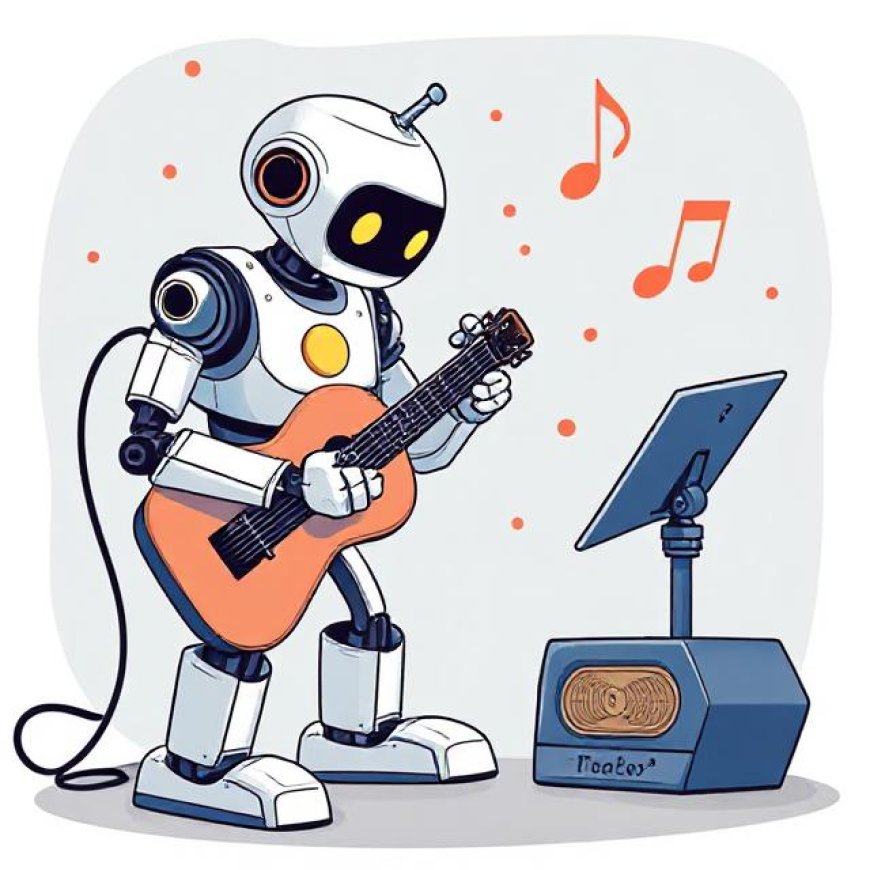
Artificial intelligence is now composing music that ranges from ambient soundscapes to fully orchestrated classical pieces. Tools like AIVA, Amper Music, and OpenAI’s MuseNet have pushed the boundaries of algorithmic composition.
3.1. Capabilities
- Generate music in various genres
- Compose background scores for films and games
- Collaborate with human musicians in hybrid arrangements
3.2. Real-World Use Cases
- AI-generated music in YouTube videos and mobile games
- Personalized soundtracks based on listener preferences
- AI composers performing in symphonic concerts (e.g., “Hello World!” by AIVA)
3.3. Challenges
- Emotional authenticity in AI-composed music
- Ethical concerns over replacing human musicians
- Licensing and authorship
Section 4: AI in Writing and Storytelling
Perhaps the most disruptive aspect of AI creativity is its role in writing. Tools like ChatGPT, Sudowrite, and Jasper can now write essays, scripts, poems, and even entire novels.
4.1. Applications
- Blogging and content marketing
- Creative writing assistance
- News generation and summarization
- Personalized storytelling for children and learning apps
4.2. Literature Meets Algorithms
AI co-authored books are appearing on Amazon, and writing contests now include AI-generated entries. Human authors use AI to overcome writer’s block, brainstorm plot ideas, and even mimic famous literary styles.
4.3. The Human Touch
Despite their linguistic fluency, AI systems struggle with:
- Deep emotional nuance
- Long-term narrative coherence
- True originality and voice
Section 5: Ethical and Philosophical Implications
As AI becomes a creator, profound questions arise about the nature of art and authorship:
5.1. What Is Creativity?
If creativity is the ability to recombine existing elements in novel ways, then AI may qualify. But if it requires consciousness, emotion, or intent, AI still falls short.
5.2. Ownership and Credit
Who deserves recognition for an AI-generated work—the coder, the user, the AI, or all of them?
5.3. The Risk of Deepfakes
AI-generated media can deceive, manipulate, or impersonate—posing risks to public trust, politics, and journalism.
5.4. Cultural Homogenization
Relying on data-trained AI could reinforce dominant cultural aesthetics, marginalizing minority voices and non-Western styles.
Section 6: Human-AI Collaboration: The Future of Creativity
Many creatives see AI not as a threat but as a tool—an amplifier of human imagination.
6.1. Augmented Artists
AI can handle repetitive tasks (e.g., colorization, formatting), allowing humans to focus on expression and vision.
6.2. Democratizing Art
AI lowers the barrier to entry, empowering people with no formal training to create.
6.3. Real-Time Interactivity
AI enables dynamic storytelling, personalized music, and interactive art installations that respond to user behavior.
6.4. Education and Therapy
Creative AI tools are used in therapy sessions, special education, and cognitive rehabilitation, offering new modes of expression.
Section 7: Industry Impact and Monetization
7.1. Advertising and Marketing
Brands use AI to generate ad copy, slogans, jingles, and visuals at scale.
7.2. Entertainment
Movie studios use AI for script analysis, soundtrack generation, and character design.
7.3. Creator Economy
AI tools enable solopreneurs to write newsletters, design merch, and produce multimedia content with minimal resources.
Section 8: What’s Next for AI and Creativity?
The next decade will likely bring:
- Real-time co-creation: Human-AI collaborations in music and film
- Immersive media: AI-generated virtual environments in AR/VR
- Emotional AI: Systems that understand and evoke emotion through creative works
- Legal frameworks: New laws around intellectual property and machine creativity
Research in neuro-symbolic AI and affective computing may push the boundaries even further—leading to a future where AI is not only creative but emotionally resonant.
Conclusion: Redefining What It Means to Be Creative
AI-powered creativity doesn’t signal the death of human art—it signals its transformation. As machines learn to paint, compose, and write, we are challenged to redefine what it means to be an artist, a musician, a storyteller.
Rather than replace us, AI can expand the creative landscape, offering tools that enhance expression, lower barriers, and spark new forms of beauty. But we must remain vigilant about how we use these tools, ensuring that creativity, in all its forms, remains deeply human at heart—even when it’s made by machines.